
Who needs access?
Residents, employees, deliveries, vendors and visitors may need different credentials and entry routines. Plan how permissions will be added, changed and removed.
HOA · APARTMENTS · COMMUNITIES
Residents, visitors, deliveries and vendors all need a clear, manageable way through the property. RADIUS designs the gate, controls and traffic pattern together.
01THE WHOLE ENTRANCE
A busy gate needs more than a larger motor. We begin with how the entrance is used and managed.
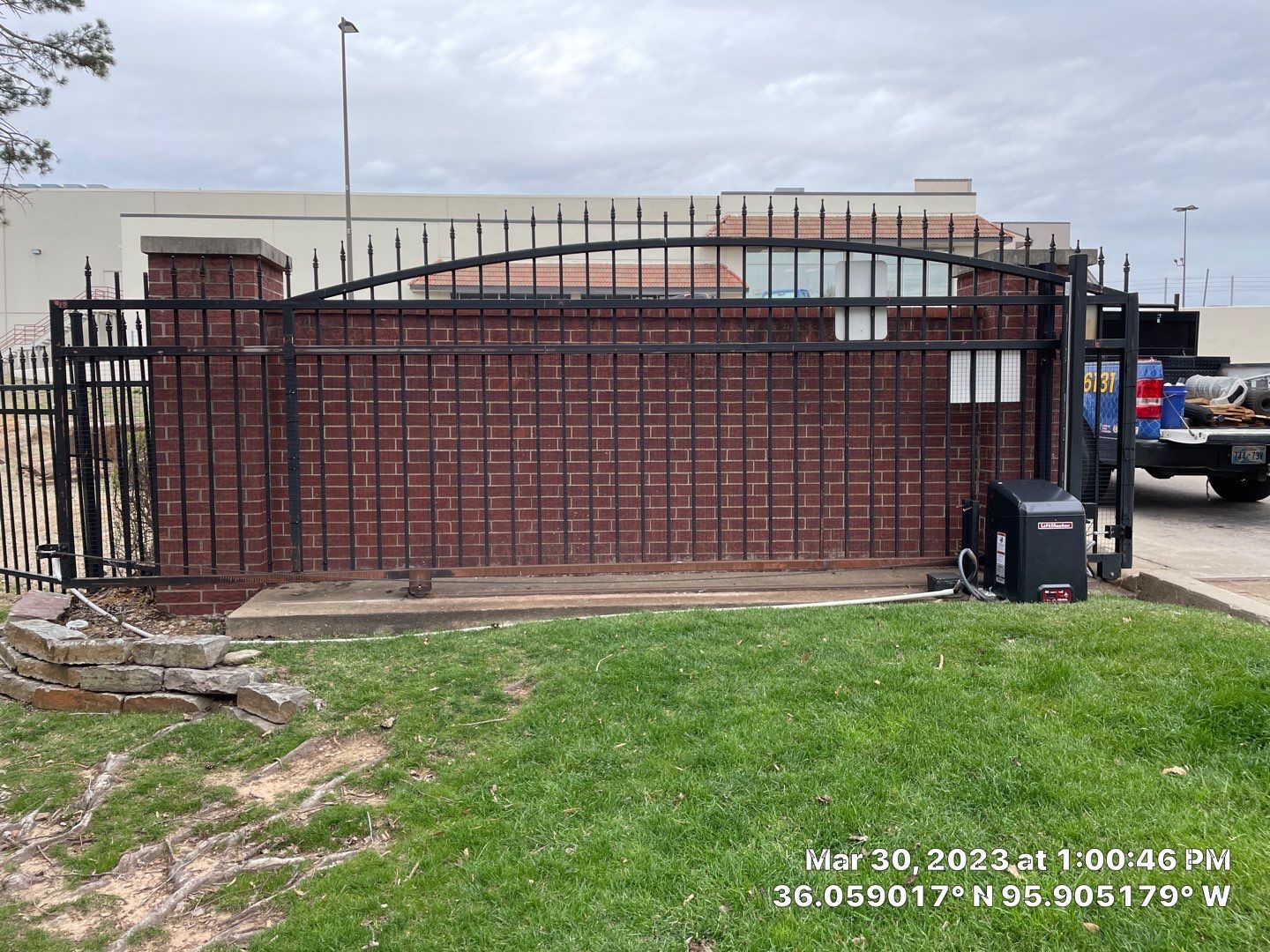
Residents, employees, deliveries, vendors and visitors may need different credentials and entry routines. Plan how permissions will be added, changed and removed.
Consider arrival peaks, queue space, vehicle lengths and the route back to a public roadway. A daily average does not describe the busiest few minutes.
Identify the property’s point of contact, visitor-entry process, service expectations and procedures for a power outage or equipment problem.
02OPERATOR SELECTION
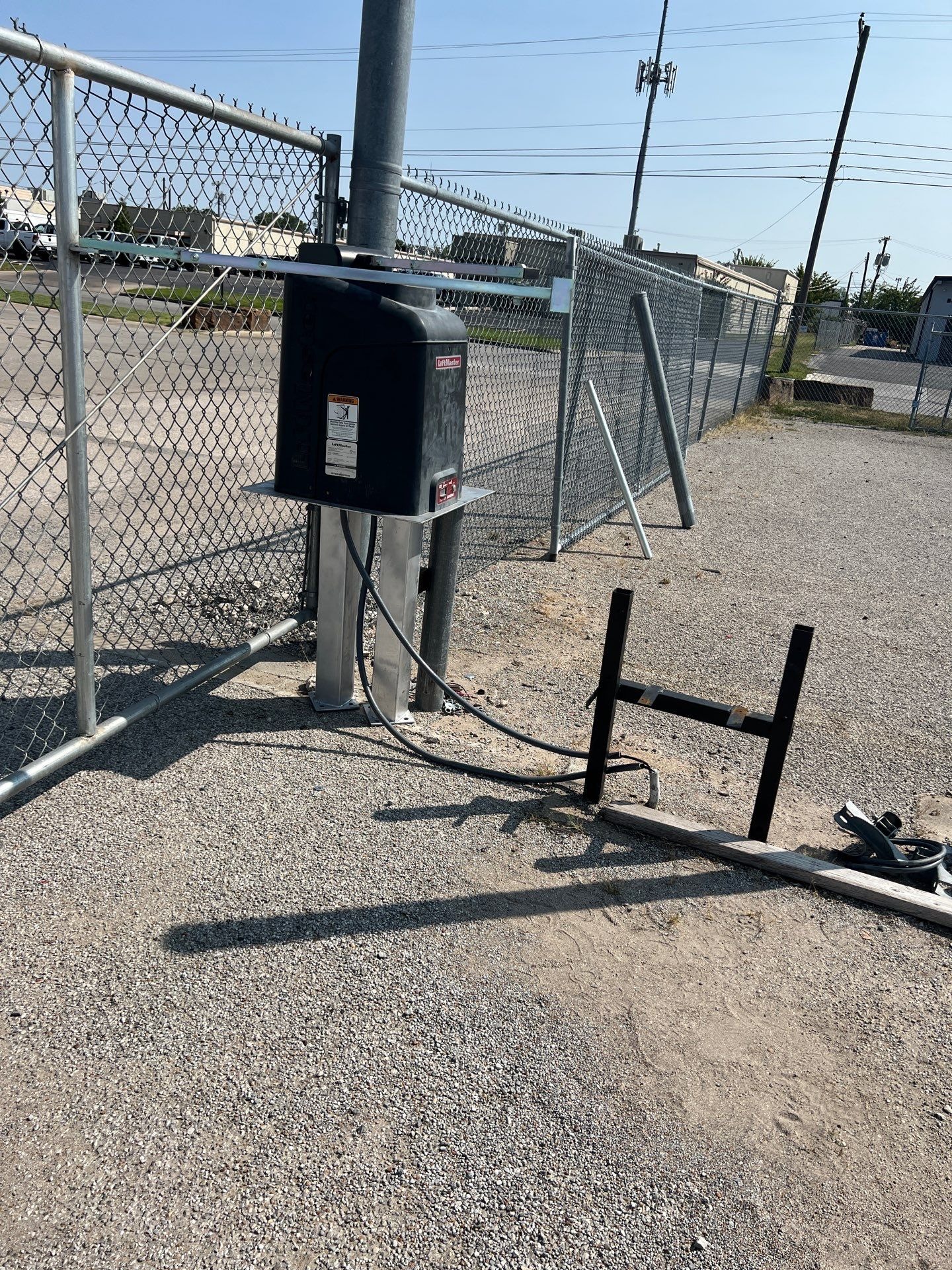
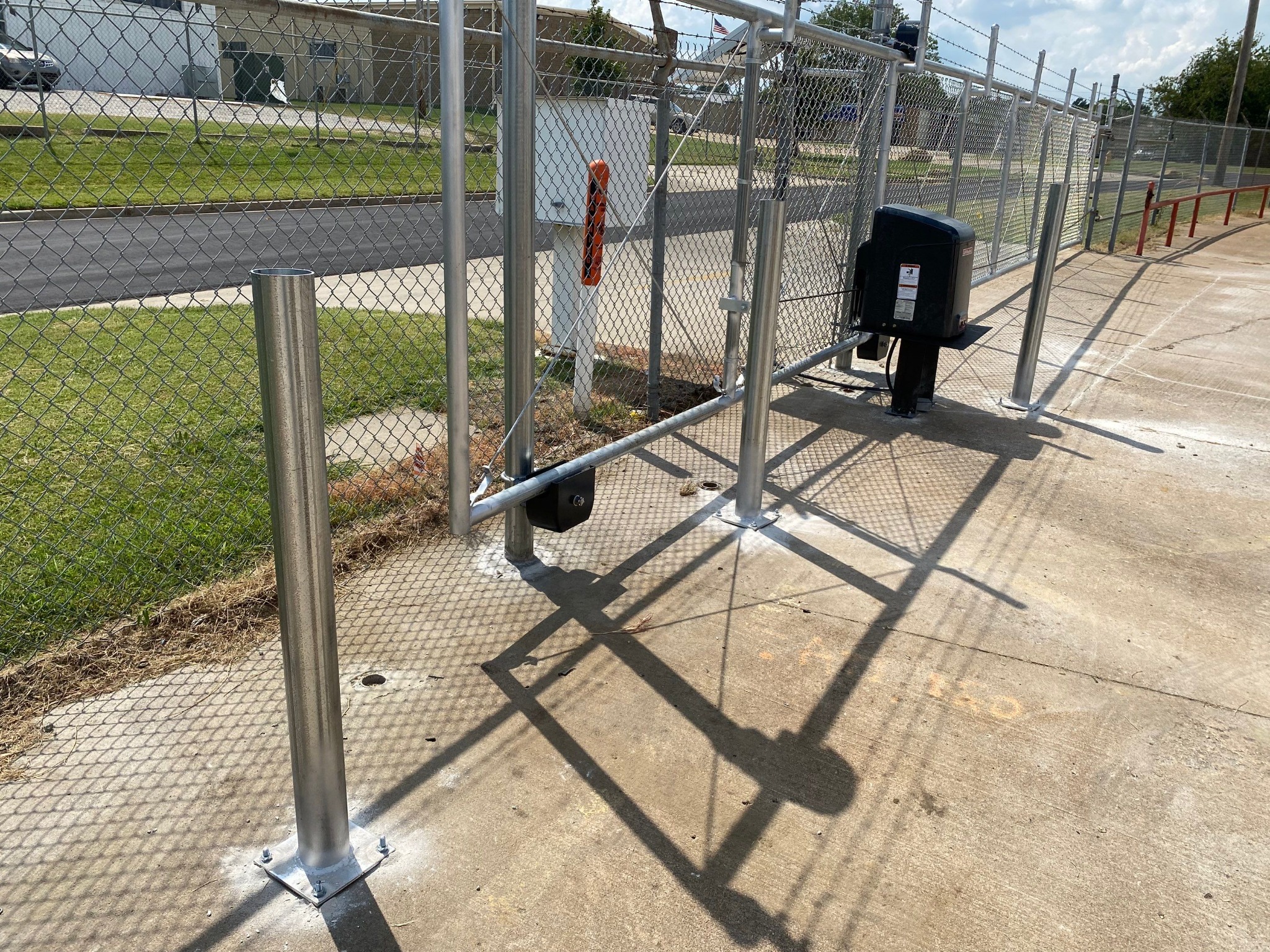
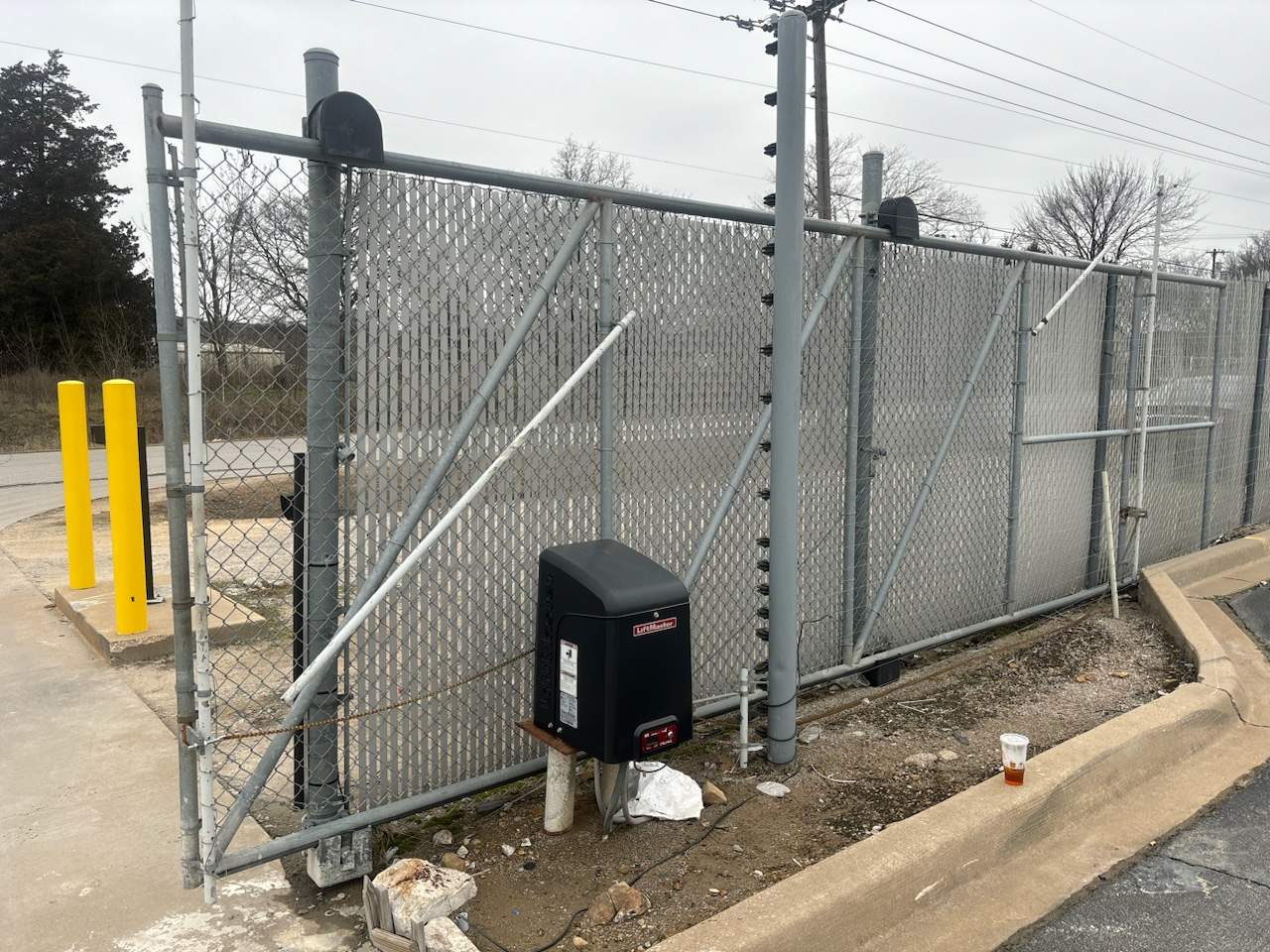
RADIUS commonly uses LiftMaster CSW24UL swing and CSL24UL slide platforms for commercial and community entrances. The final selection depends on the gate, traffic, duty requirements, power and accessories.
Mechanical condition comes first. A commercial operator cannot correct poor foundations, gate resistance or an unsuitable layout.
Understand operator selectionFor appropriate commercial swing-gate installations, with external protective devices selected for the identified hazards.
For appropriate commercial slide-gate installations, with the entire runback, fence interface and gate path evaluated.
03ACCESS & VEHICLE DETECTION
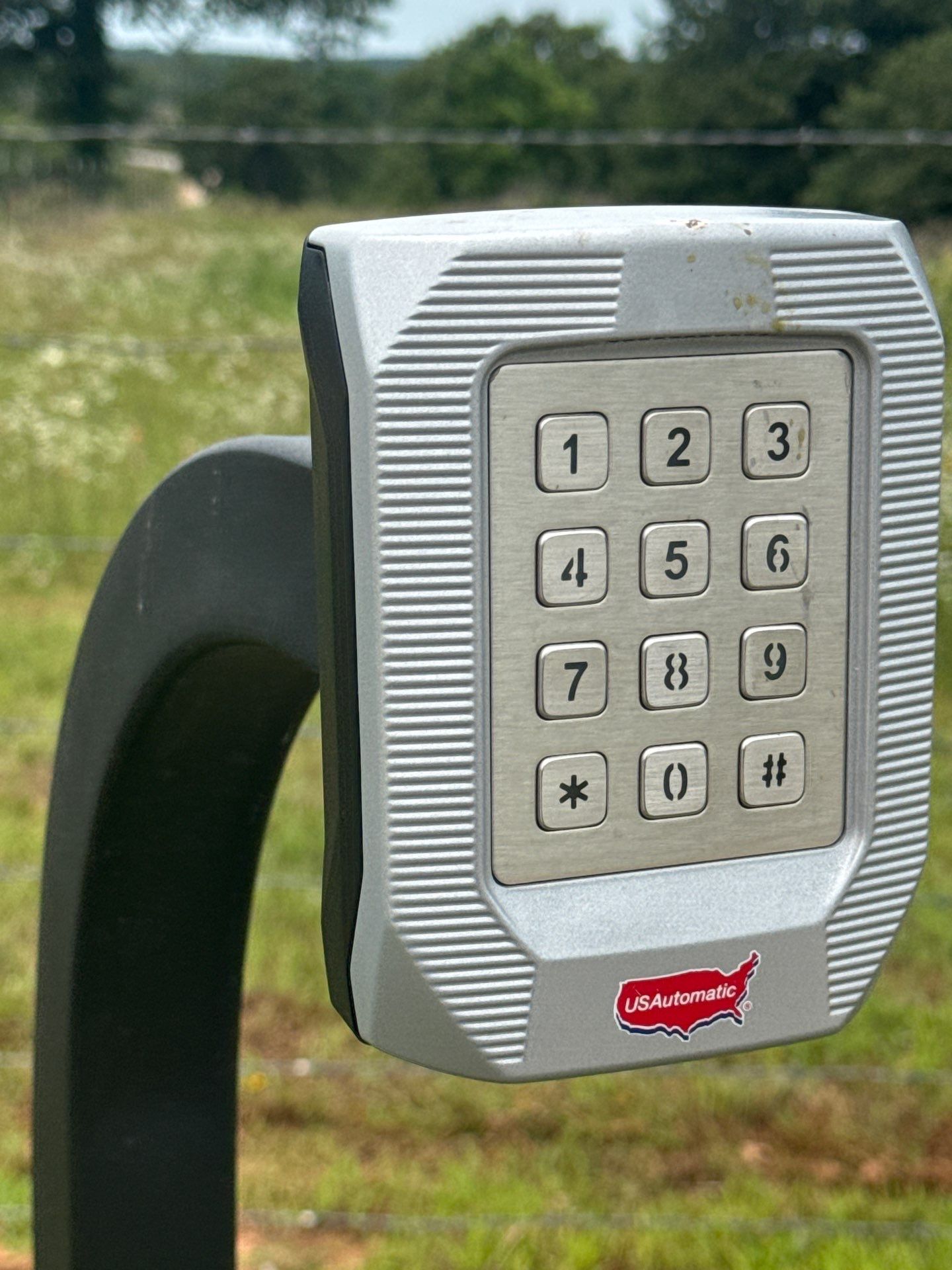
Keypads, call boxes and intercoms should match the property’s communication needs, connectivity and power. Their location matters as much as their features.
Select access methods around who administers the property. Consider residents, temporary visitors, vendor schedules and changes in occupancy.
Loops, probes and other vehicle detectors serve different jobs. We evaluate the approach, waiting area and exit pattern before selecting and positioning them.
A vehicle detector does not automatically qualify as entrapment protection. Monitored photo eyes and sensing edges must be selected and installed for the specific operator and identified zones.
SAFETY & CONTINUITY
Shared entrances bring more people and more variables. RADIUS evaluates both directions of travel, pedestrian access, control placement, warning signs and manual-release procedures.
Read our entrapment-protection guidanceQuarterly professional service is a useful starting point for many HOA and commercial entrances. Actual frequency should reflect the equipment, traffic and operating conditions.
Owner/operator testing must also follow the manufacturer’s instructions. Scheduled service supports that responsibility.
Explore preventive maintenanceSECTION 08 / THE RADIUS GUIDE
Plan free exit, shadow detection and safety zones around the way vehicles actually approach and leave.
Vehicle detection systems help prevent an automatic gate from closing on or moving into a vehicle. They are different from entrapment-protection devices, which are designed to protect people and animals. Vehicle detectors should never be presented as a replacement for the monitored photo eyes, sensing edges and other protections required for the identified entrapment zones.
RADIUS traditionally installed vehicle loops using soft-cut or direct-burial methods. In many Oklahoma applications, we now use Optex above-ground microwave and ultrasonic sensing, including the Optex OVS-GT2 platform, when the property and traffic pattern are appropriate.
Above-ground sensing can reduce pavement and concrete cutting, repairs and disruption to custom driveways. Field adjustment is Bluetooth-based through the manufacturer’s application. Precise aiming and adjustment may require more than one visit because the sensor must be tuned to the way vehicles actually approach the gate.
Optex sensing is generally aimed down the approach because it is designed to identify moving targets. It does not behave exactly like an in-ground loop, which detects a vehicle occupying and changing the electromagnetic field. The selected technology must match the driveway, approach speed, geometry and operating goals.
Loops remain appropriate for some large commercial and industrial driveways, unusual approaches and applications where a stationary vehicle must reliably remain detected. Very large openings, non-straight approaches or abnormal detection areas may require a different solution or a combination of technologies.
In-ground loops also require loop detectors and wiring that can be affected by age, water, lightning and electrical interference. RADIUS uses a megohmmeter to evaluate loop condition and identify whether a loop is testing normally, entering a caution range or failing.
A free-exit detector allows an authorized vehicle to leave a secured property without requiring a keypad, remote or other access command.
A shadow or center zone detects a vehicle positioned beneath or near the moving gate. This is particularly important for swing gates, where a vehicle can be halfway through the opening while the gate is moving.
Vehicle-safety detection is normally placed toward the outside of the property or near a roadway. Its purpose is to keep the gate open when vehicles are queued, waiting or backing toward public traffic. “Safety” here refers to protecting vehicles and traffic flow; it is not a substitute for pedestrian entrapment protection.
We study how vehicles approach, where they stop, how they leave, how much queue space exists and what happens during peak use. HOAs and apartment communities may need free exit, shadow detection and outside safety detection at the same entrance. A short distance between the gate and public roadway creates a different risk than a long internal driveway.
Vehicle detection can fail because of outdated loop detectors, damaged wiring, environmental changes, construction, sensor misalignment or changes in traffic flow. If roadway work changes the approach, the system should be recalibrated and its original design intent rechecked.
If a gate begins striking vehicles, fails to hold open when it should, or behaves inconsistently, stop relying on normal automatic operation. Hold the gate open or disconnect power as appropriate and contact a qualified gate professional.
In-ground loops should be evaluated approximately every six months as part of a regular maintenance program. Optex systems should be checked for alignment, cleanliness, correct incoming and outgoing voltage and reliable detection. Any detector or probe should be evaluated after storms, roadway changes or unusual gate behavior.
The best vehicle-detection system is the one designed around actual traffic. RADIUS looks at the entire entrance rather than choosing a sensor from a catalog without understanding how the property operates.
SECTION 09 / THE RADIUS GUIDE
Choose credentials, communication, management and emergency access around the people who use the property.
RADIUS uses access control to manage who can enter and leave—not to suggest that an automatic gate alone is a complete security system. The right solution depends on the property, the users, the desired audit trail and how much administration the owner wants to perform.
Single-family homeowners may prefer a simple system: a few remotes, a wireless keypad or app-based control. Many prefer push-to-open and push-to-close operation, similar to a garage door, so the gate remains open until another command is received.
An app or cellular system can allow the homeowner to authorize a service provider when contacted by phone or text. Keypads are convenient, but shared codes reduce accountability because the owner may not know who used the code.
HOAs often benefit from telephone-entry or video-intercom systems that let residents authorize visitors and deliveries without distributing a permanent gate code. Individual resident credentials, vendor rules and cameras can provide a clearer record of access.
Apartment communities may need directories, individual credentials, temporary guest permissions and a practical process for removing former tenants. A code that has been shared for years can give unknown people access and make an event log difficult to interpret.
Commercial properties generally benefit from individual credentials, defined permissions and an audit trail. When employees, vendors or contractors leave, their access should be removed promptly. The system should identify who administers users, schedules and emergency permissions.
RADIUS works with existing access-control companies when a gate needs to tie into a building system. In other projects, the gate and access platform may remain independent so one responsible team can manage the physical entrance. The correct choice depends on the facility’s needs and management structure.
Modern systems may use local Bluetooth, cellular communication, a wired LAN or a web-based management portal. Supported platforms can provide remote user changes, event schedules, individual credentials and temporary guest permissions such as QR codes.
DoorKing’s current DKS materials list cellular and retrofit connection options for supported equipment, along with Cloud Account Manager programming for supported 1830-series systems. An older DoorKing telephone-entry system may be a candidate for cellular modernization, but compatibility, power, wiring, cellular coverage and manufacturer support must be verified first. A retrofit can reduce dependence on outdated copper telephone service without implying that every legacy unit can be converted.
Emergency access devices must be coordinated with the local jurisdiction and property owner. RADIUS can help wire, test and coordinate a compatible Knox switch or other approved system, but the owner remains responsible for permits and jurisdiction-specific requirements. If an emergency-access device fails, the gate should be placed out of service and addressed immediately.
Activation controls must be positioned so users cannot reach through, over, under or around the gate to operate it. RADIUS evaluates keypad, call-box and other control locations during the design process. Separate pedestrian access should be provided where pedestrian traffic is expected.
Owners and property managers are responsible for maintaining users, vendors and permissions. Lost remotes, compromised codes and former employees should be removed or changed immediately. Shared vendor codes may be rotated regularly, but individual credentials provide better accountability when the property needs to know who accessed the gate and when.