
RESIDENTIAL AUTOMATIC GATES
An entrance that
works for your life.
Explore the decisions behind a dependable driveway gate—from its first site assessment to the safety devices that protect its travel.
The gate, the operator
and everything between.
Residential gate design brings structure, movement, power, access and safety together. Each part influences the next.
Use this guide to understand RADIUS’s approach, then talk with us about the conditions at your property.
IN THIS GUIDE
SECTION 01 / THE RESIDENTIAL GUIDE
The RADIUS approach
A dependable entrance begins with the whole system.
A residential entrance should work with the way your family lives. It needs to welcome the right people, help manage access to the property, and operate dependably through ordinary Oklahoma weather.
RADIUS begins with the whole entrance: the gate itself, the operator, the power supply, access controls, vehicle detection, safety devices and ongoing service. A good-looking gate is only the beginning.
Start with what you want to protect
Some homeowners want more control over who enters the driveway. Others want to improve the appearance of an acreage entrance, manage deliveries, or replace an unreliable operator. Those goals lead to different designs.
We ask who uses the entrance, how often they come and go, and what happens when visitors arrive. The best system is one your family understands and can use consistently.
Design for everyday use
- Make room for your vehicles, visitors and service providers.
- Plan how guests request entry and how vehicles leave.
- Consider children, pets and pedestrians around every moving part.
- Account for power outages, weather and manual release.
- Match the system to its expected traffic and accessory load.
- Plan for maintenance and future changes before installation.
An automatic vehicular gate is not a pedestrian entrance or a substitute for supervision. Safe access and clear owner instructions belong in the design from the beginning.
One complete ACCESS system
Our six-part ACCESS Standard connects the decisions that determine how an entrance performs: Assess & Design, Correct Operator, Constructed-Right Gate, Entrapment Protection, Smart Vehicle Sensing and Scheduled Service.
We build environments to protect what you value most. That commitment continues after the gate moves for the first time.
SECTION 02 / THE RESIDENTIAL GUIDE
Assessing your property
Driveway, grade, wind, power and the people who use it.
The site visit is where a dependable entrance begins. A drawing can show the opening, but the property tells us how the gate will actually behave.
Driveway, grade and available space
We evaluate the driveway width, approach, turning room, surface condition and changing grade. A swing gate needs a clear arc. A slide gate needs space beside the opening, including any counterbalance section.
Columns, retaining walls, trees, drainage and the fence line all affect the layout. We also look at where a vehicle waits while the gate opens and whether a trailer or delivery vehicle can approach comfortably.
Wind and gate infill
An open ornamental gate and a solid privacy gate can place very different demands on an operator. Wind acts on the gate’s surface area; length and weight alone do not tell the whole story.
We discuss the appearance you want while considering how much wind the design will catch. The operator, hinges, frame, posts and foundations must work together.
Power, communication and accessories
- Identify the nearest practical AC supply and the route for conduit.
- Evaluate unobstructed sunlight when solar is being considered.
- Check connectivity needs for a call box, intercom or remote-access feature.
- Include every accessory in the system’s power calculation.
- Plan vehicle sensing and safe control locations before concrete or paving work.
RADIUS proposals generally identify incoming electrical supply as provided by others. We coordinate the operator requirements and the point where power should terminate; the exact electrical scope belongs in the proposal.
Plan the complete path of travel
We examine the space where the gate opens as carefully as the driveway it closes. Walls, posts, rollers, hinges and fence lines may create hazards that need protection or a change in layout.
The result is a site-specific plan for the entrance—not a collection of accessories selected after installation.
SECTION 03 / THE RESIDENTIAL GUIDE
Swing gates versus slide gates
Choose the motion that fits the space.
There is no single gate type that fits every property. RADIUS often favors swing gates for residential work in northeast Oklahoma when the driveway and surrounding space allow a suitable, protected swing path.
Swing gates
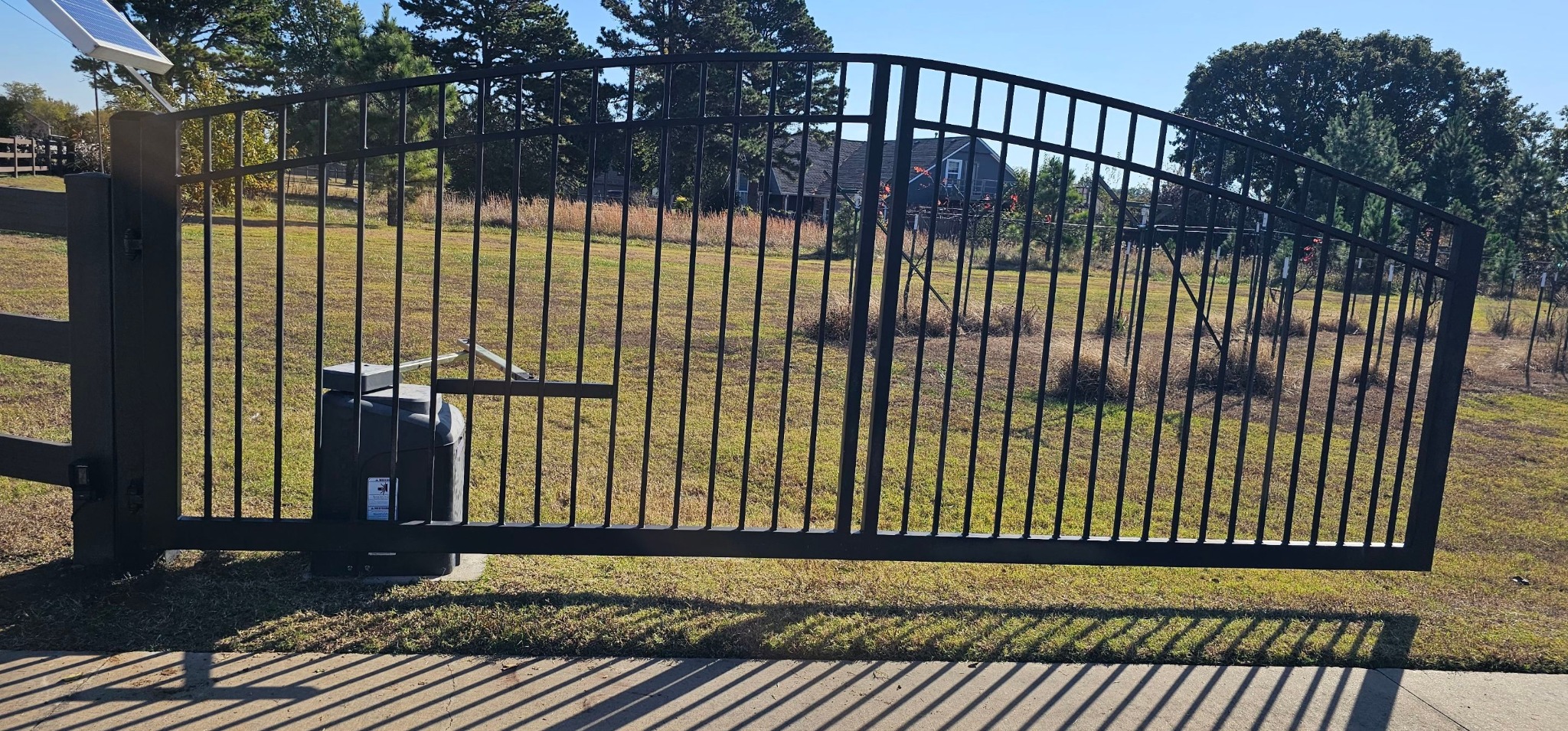
A swing gate rotates from its hinge post. It can provide a clean residential appearance and avoids a track crossing the driveway. Single- and dual-leaf layouts offer different ways to accommodate an opening.
The design must account for grade beneath the gate, the full swing arc, nearby walls or columns and wind on the gate surface. Splitting an opening into two leaves does not eliminate the need to assess and protect each moving gate.
Slide gates
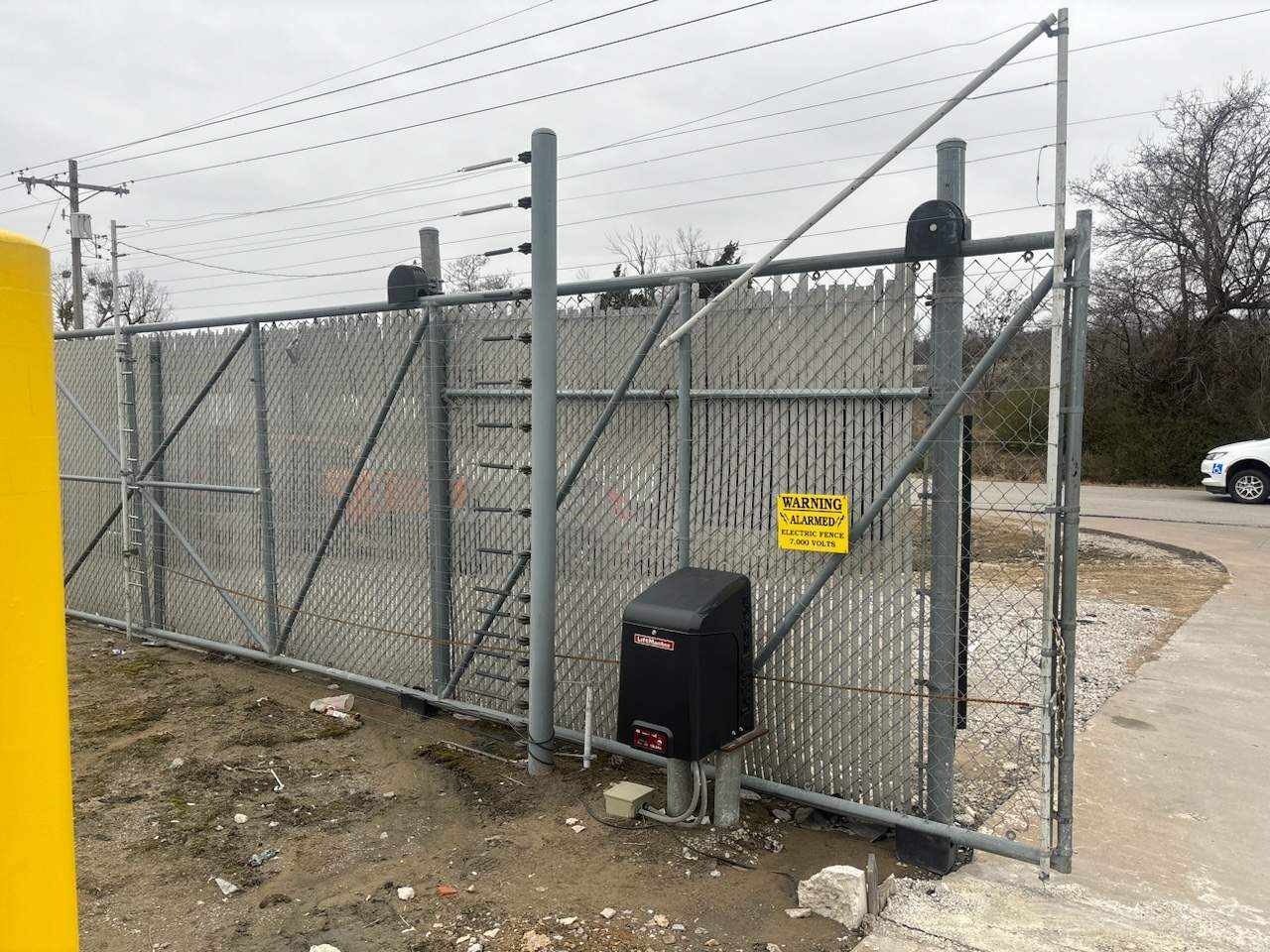
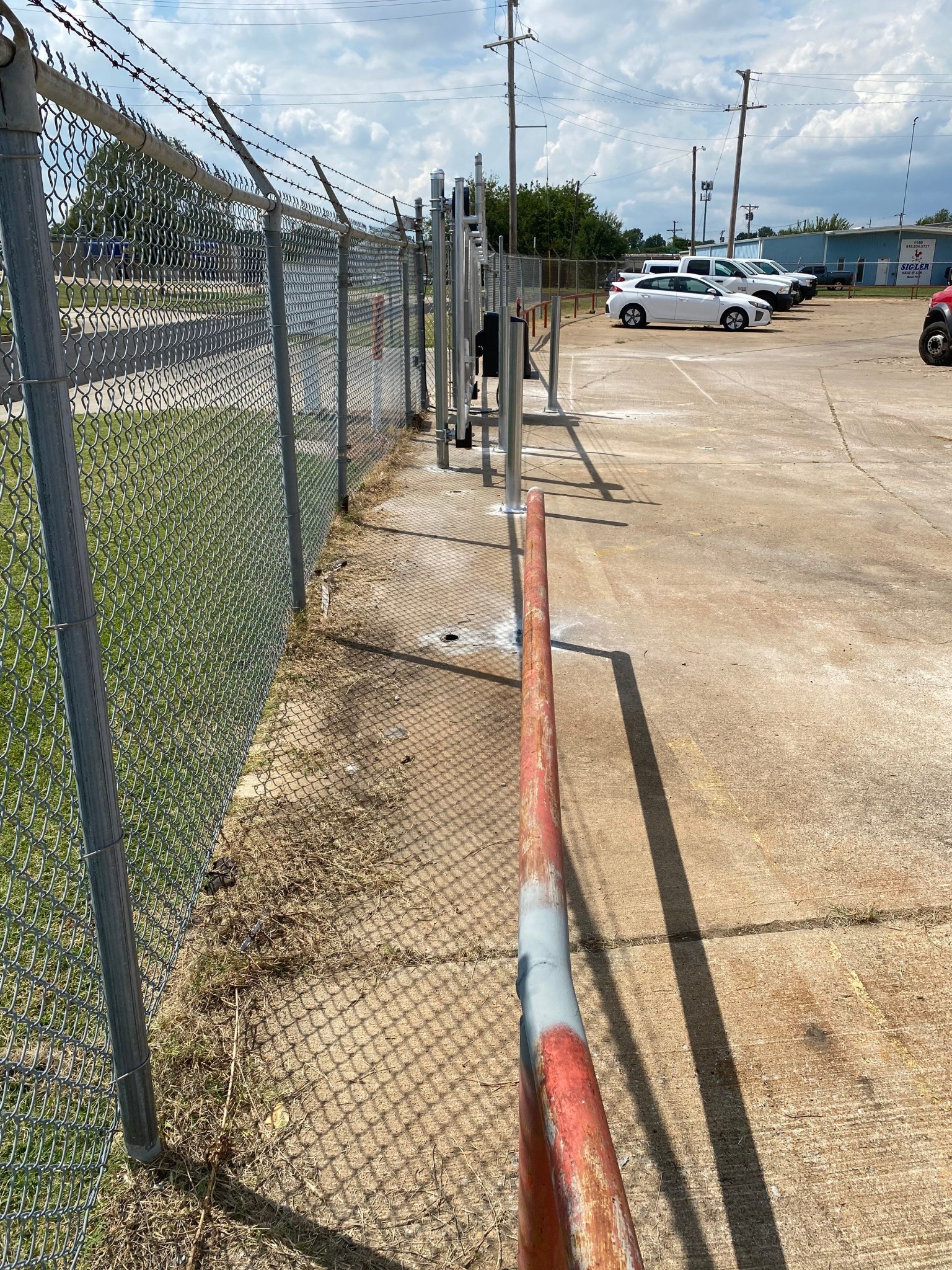
A slide gate moves sideways along the fence line. It may suit a property where a swing arc is impractical, but it needs enough clear runback space for the entire moving assembly.
The gate’s leading and trailing edges, posts, adjacent fence and rollers create different hazards from a swing gate. A professional design addresses the complete opening and closing path.
Why we are cautious about V-track
A ground track places part of the moving system directly in the driveway. Ice, debris, gravel and changes in the surface can interfere with operation. RADIUS generally discourages V-track for residential situations where a more suitable alternative is available.
That is a local design preference, not a statement that every track-based installation will fail. Surface conditions, maintenance and the specific site matter.
When a cantilever makes sense
A cantilever gate spans the driveway without a wheel track across the opening. It can be useful where grade, gravel, drainage or driveway conditions make a ground track undesirable.
It also requires an appropriately designed support system and sufficient room for the counterbalance or tail section. That entire moving section must be included in the safety assessment.
Our decision
We select the configuration that fits the property, traffic and protective requirements. The goal is free movement, a practical entrance and a system that can be maintained over time.
SECTION 04 / THE RESIDENTIAL GUIDE
Constructed-Right Gate
Free movement, suitable structure and dependable hardware.
An operator should move a properly built gate. It should not compensate for a sagging frame, undersized posts, binding hinges or a driveway that interferes with travel.
A structure built for the opening
RADIUS considers the frame, infill, gate span, weight, wind exposure and attachment points together. Custom steel and aluminum gates require a design appropriate to the opening and intended use.
Posts and concrete footers must be selected for the gate and site conditions. Soil, leverage and the loads transferred through the hinges or support hardware all matter. We do not use one universal footer size for every entrance.
Hinges and adjustment
Where appropriate, RADIUS favors BADASS CI3000 hinges with sealed-bearing construction and adjustment capability. On installations using greasable barrel hinges, lubrication becomes part of the service requirements.
The hinge choice is only one part of the assembly. Alignment, attachment, clearance and a suitable supporting structure determine how well the gate moves.
The constructed-right check
- The frame remains aligned and moves through its intended travel.
- Hinges, guides and rollers match the gate’s loads and use.
- The gate clears the ground and nearby fixed objects as designed.
- Stops, support hardware and operator attachments follow the equipment requirements.
- Gate construction and protective measures address the identified hazards.
- The finish and drainage details suit outdoor exposure.
Repair the mechanics before adding force
A gate that drags or binds consumes more energy and places unnecessary load on the operator. Increasing force is not a repair for a mechanical problem.
The same principle applies to a replacement operator: first determine whether the gate is ready to be automated. Replacing electronics alone may leave the underlying problem untouched.
SECTION 05 / THE RESIDENTIAL GUIDE
Choosing the correct operator
Match the equipment to the gate and its workload.
RADIUS selects an operator around the gate’s geometry, weight, wind exposure, expected cycles, available power, accessories and long-term service needs.
A maximum capacity on a specification sheet is not an automatic recommendation for every gate at that size. The installation still has to fit the manufacturer’s instructions and the actual conditions.
Our residential swing preference
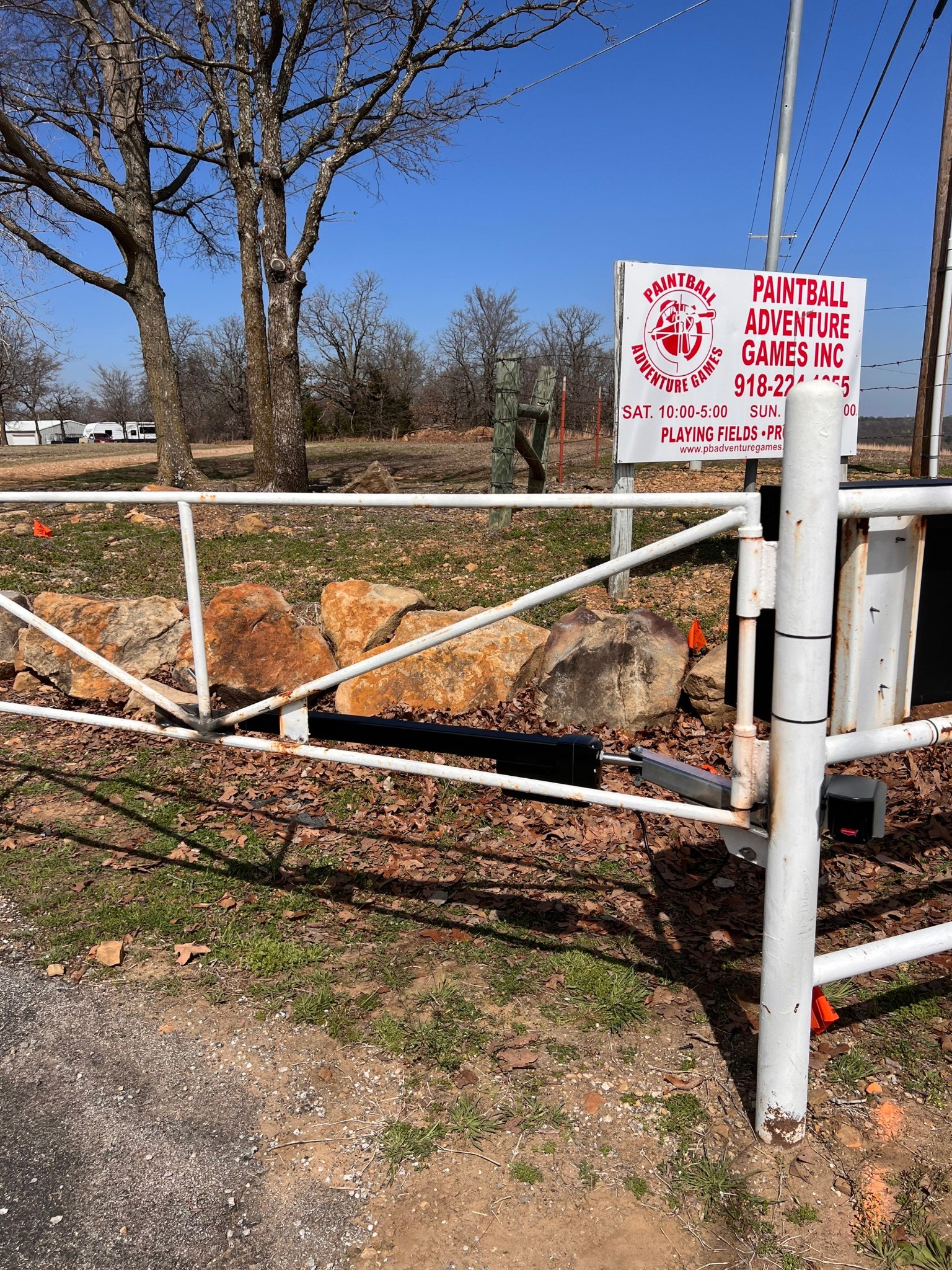
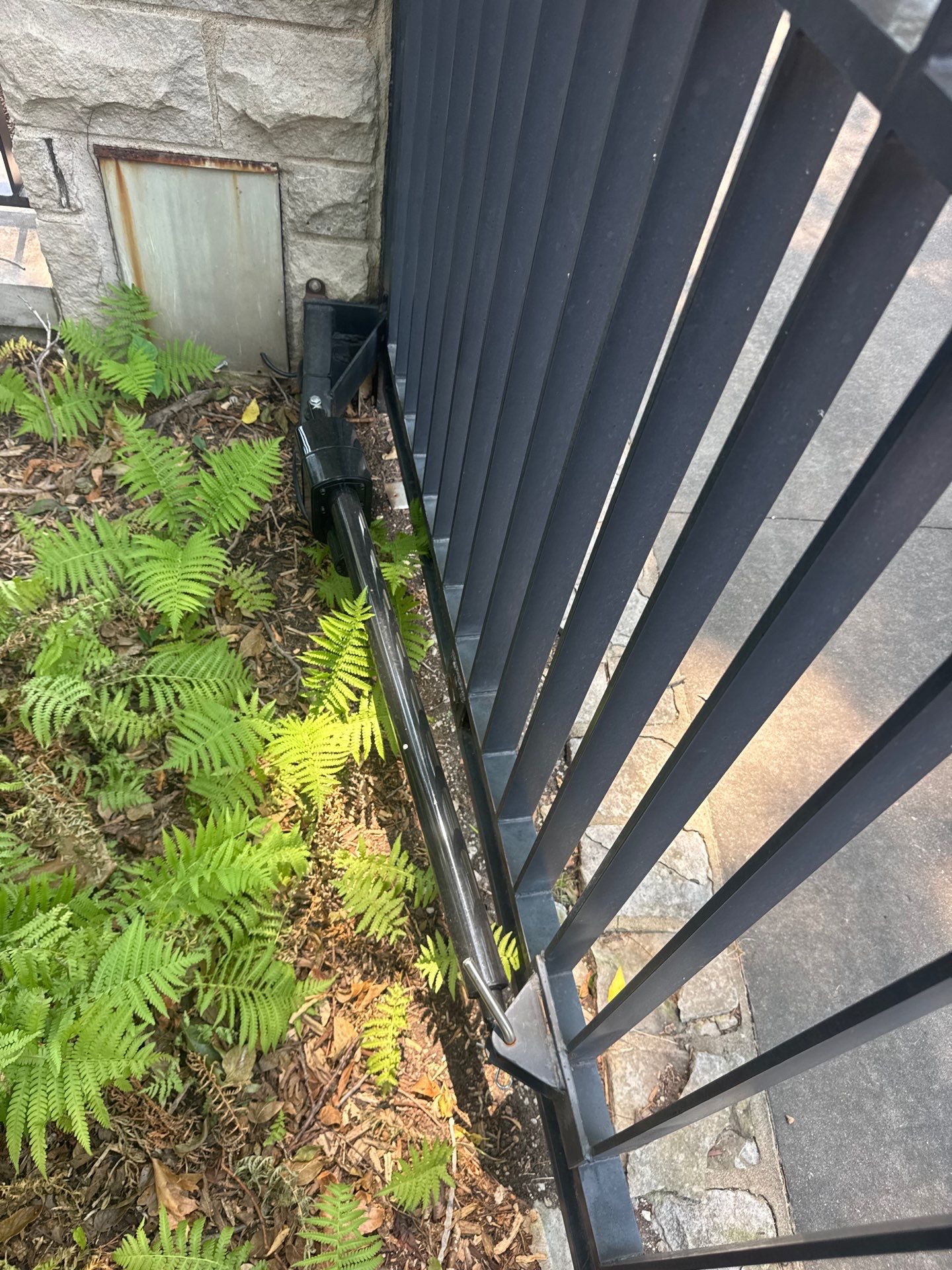
The USAutomatic Ranger HD is a preferred option for many of our residential swing-gate installations. Its manufacturer lists a maximum leaf width of 16 feet and maximum leaf weight of 800 pounds, subject to the applicable installation requirements.
It uses a battery-based system with AC or solar charging options. We evaluate the gate and accessory demand before deciding whether it is the correct fit.
RADIUS adopted the Ranger HD as a residential preference based on our field experience and the goal of reducing callbacks. Product selection remains specific to the property.
Higher traffic and heavier applications
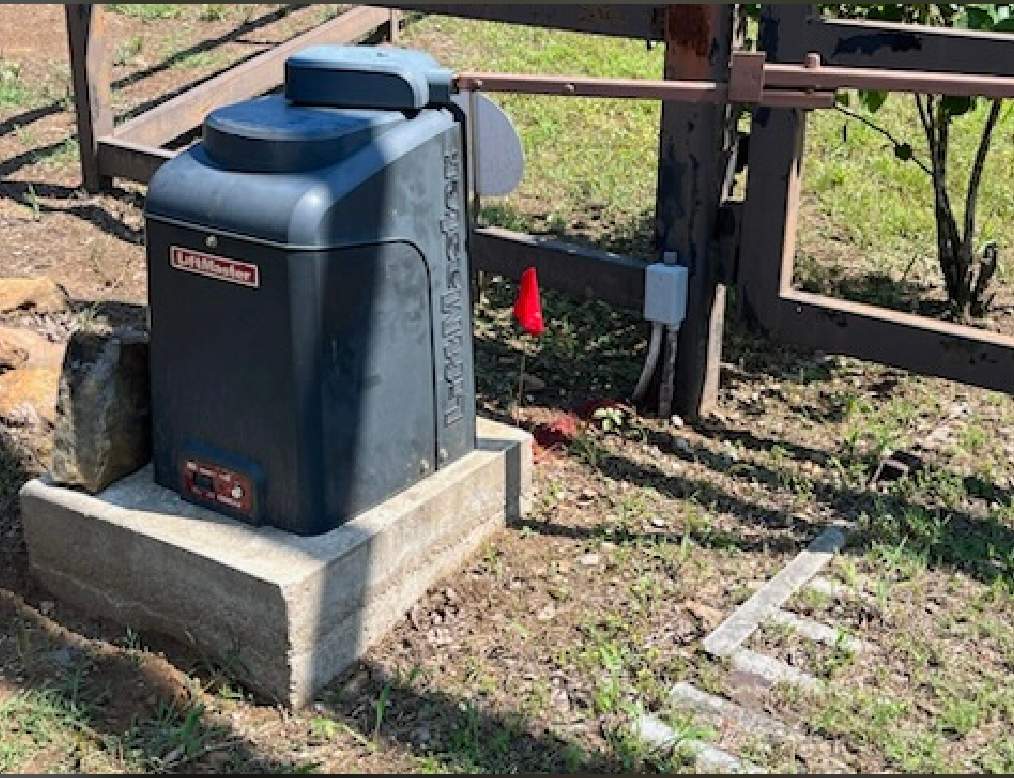
For commercial, HOA and other demanding entrances, RADIUS commonly works with the LiftMaster CSW24UL for swing gates and CSL24UL for slide gates.
These are commercial operator platforms. We consider traffic patterns, gate construction, power, access-control needs and service expectations together before selecting the equipment.
A residential property can also warrant a commercial operator. A larger or demanding entrance should be evaluated on its actual requirements rather than the property label alone.
Brand experience without blanket promises
We have encountered a wide range of gate-operator brands over time. Our recommendations reflect what we have learned about installation, diagnostics, parts and service. An unfamiliar brand name alone does not diagnose a gate problem, and a premium operator does not correct a poorly constructed gate.
Warranty and cost of ownership
Manufacturer parts coverage varies by product, application and warranty terms. Labor, travel and service calls are not automatically included with a parts warranty; RADIUS labor is billed per call unless a separate agreement provides otherwise.
As a planning guideline, RADIUS commonly discusses approximately $250–$750 per year for typical gate ownership and maintenance. Actual costs vary with usage, battery condition, equipment, weather and needed repairs. Major component replacement can exceed that range.
The proposal and applicable manufacturer warranty establish the coverage for your installation. Discuss service expectations with us before choosing the final equipment.
Equipment references: USAutomatic Ranger HD · LiftMaster CSW24UL
Back to the guide ↑SECTION 06 / THE RESIDENTIAL GUIDE
AC power versus solar charging
Balance charging capacity, battery reserve and daily demand.
Residential gate operators need two things from their power system: enough energy to complete every expected gate cycle and enough reserve capacity to remain dependable when conditions are less than ideal.
For most properties, RADIUS prefers AC charging when reasonably accessible. When extending electrical power to the entrance would require substantial trenching, pavement removal or other expensive site work, a properly designed solar system can be an excellent alternative.
Solar is not automatically less reliable. It is simply more dependent on correct design, available sunlight, battery storage, accessory demand and ongoing maintenance.
When Solar Is a Smart Choice
Solar charging makes the most sense when convenient AC power is unavailable near the gate.
Common examples include:
- Acreage and rural entrances
- Long driveways
- Gates far from the home or nearest electrical panel
- Existing concrete, asphalt or landscaping that would be expensive to disturb
- Drainage structures or other obstacles blocking a practical conduit route
- Locations where extending electrical service would cost substantially more than a solar package
Oklahoma generally provides favorable conditions for solar gate automation. RADIUS has installed residential, commercial and industrial solar systems that have operated reliably for years.
The system’s success depends on more than attaching a panel to an operator. Solar charging must be designed around the entire entrance.
When AC Power Is Preferred
When AC power can be reasonably brought to the gate, it is normally our preferred charging source.
AC charging has fewer environmental dependencies. The homeowner does not have to rely on panel exposure or worry as much about:
- Tree growth
- Seasonal shade
- Dirt and grime on the panel
- Storm debris
- Multiple cloudy days
- Accidental panel damage
- Changes to surrounding landscaping
That does not make solar unreliable. It simply means that AC charging removes several variables from the system.
Many of our preferred operators still operate through DC motors and batteries. The incoming AC power supplies a charger or power supply that maintains those batteries. This gives the homeowner normal battery-based operation along with backup capacity during a utility outage.
Solar Reliability Begins With Design
Poorly designed solar systems create the perception that solar gate operators are unreliable.
A successful system requires RADIUS to evaluate:
- Expected daily gate cycles
- Gate length and weight
- How freely the gate moves
- Operator voltage
- Motor efficiency
- Battery capacity
- Solar-panel output
- Seasonal sunlight
- Panel direction and tilt
- Shade and future tree growth
- Wire-run distance
- Voltage drop
- Keypads, photo eyes, sensors and other accessories
- The amount of reserve capacity needed for cloudy weather
A heavy gate that binds or drags requires more energy every time it moves. That mechanical resistance can consume battery reserve regardless of how large the solar panel appears.
The first step in solar reliability remains the same as every other RADIUS installation: the gate must swing or slide freely before the operator is attached.
Daily Usage Determines System Size
Homeowners frequently underestimate how often their gates will cycle.
A family may initially estimate four to six cycles per day, but normal activity from work, school, visitors, deliveries, lawn service and other vendors can quickly double that number. It is also important to distinguish a complete open-and-close cycle from an individual opening or closing movement.
RADIUS therefore builds a planning buffer into the expected usage instead of sizing the system to the customer’s lowest estimate.
The system must generate enough energy to replace what the operator and accessories consume while maintaining a battery reserve for nighttime use, cloudy weather and unexpected traffic.
High-use installations may require:
- Additional solar-panel capacity
- A larger battery bank
- Higher amp-hour storage
- Low-current accessories
- More conservative gate-cycle assumptions
- More frequent battery inspections
- A different operator or voltage platform
USAutomatic systems are particularly useful in solar applications because their charging and battery-management components are designed around low-current operation. Their separate charge-controller information also gives our technicians useful diagnostic feedback about panel input and battery charging.
Shade and Tree Growth
Solar panels need unobstructed sunlight.
Partial sunlight produces partial charging results. Some well-designed systems may continue operating with less-than-ideal exposure, but RADIUS does not use that as the basis of the design.
We evaluate both current and future conditions:
- Existing tree canopies
- Young trees that will grow into the solar path
- Seasonal leaves
- Buildings and masonry columns
- Fencing and gate position
- Morning and afternoon shadows
- The lower winter sun angle
- New landscaping planned for the property
A location that works during the summer may become heavily shaded during winter when the sun travels lower across the southern sky.
The target is enough dependable solar exposure during the most challenging part of the year—not merely excellent production during a sunny Oklahoma summer.
Panel Direction and Angle
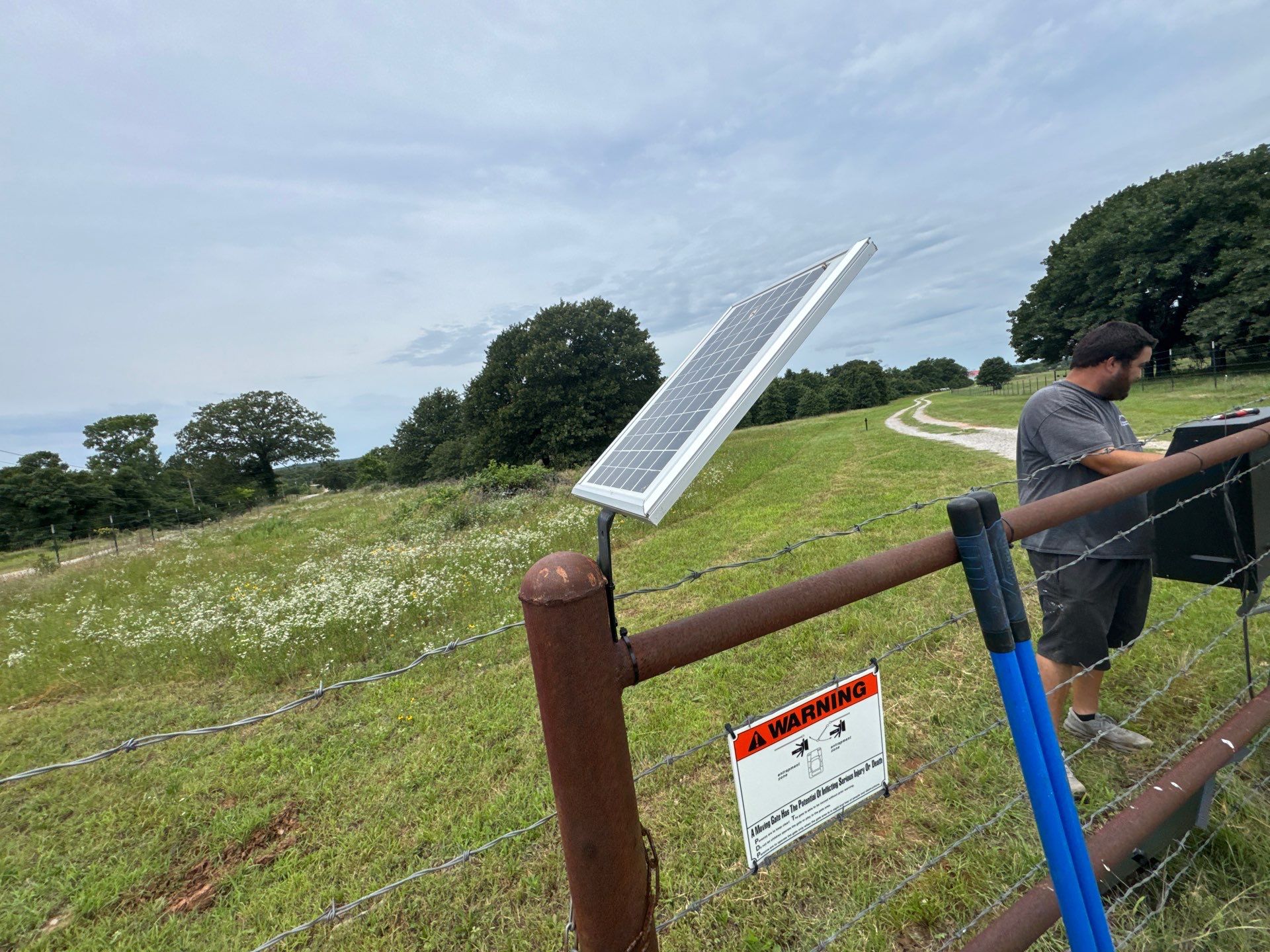
In northeast Oklahoma, a fixed solar panel will generally face southward to collect the strongest practical sunlight across the year.
The panel’s exact direction and tilt should be selected for:
- The property’s available exposure
- Seasonal sun angles
- Operator-manufacturer instructions
- Winter charging needs
- Tree and building obstructions
- Required daily energy production
RADIUS often favors a steeper angle than someone might expect because winter sunlight is lower on the horizon and winter battery performance is more challenging. A steeper panel can also shed rain, snow and some debris more effectively.
There is not one universal angle for every gate. The correct position is the one calculated for the operator, property and expected usage.
Distance Between the Panel and Operator
A solar panel can be moved away from the operator when the immediate gate area does not receive adequate sunlight. However, longer wire runs create additional resistance and voltage drop.
Electricity can be explained somewhat like water moving through a hose: a longer or smaller pathway restricts how effectively the available energy reaches its destination.
The required conductor size depends on:
- Wire-run distance
- Charging current
- System voltage
- Panel output
- Allowable voltage drop
- Manufacturer requirements
A panel located 50 or 60 feet from the operator may require substantially larger conductors than a panel mounted beside the control cabinet. RADIUS calculates the run rather than automatically assigning one wire size to every installation.
Cloudy and Rainy Weather
Solar panels continue producing some energy under cloudy conditions, but production is reduced.
A correctly sized system should have enough battery reserve to carry the gate through normal overnight operation and reasonable periods of poor weather. The amount of reserve depends on the gate, operator, accessories and traffic.
Several dark or rainy days combined with unusually high usage can eventually consume that reserve. This is why RADIUS sizes the batteries and charging system conservatively rather than assuming ideal sunshine every day.
Oklahoma Heat, Cold and Battery Performance
Oklahoma temperatures affect batteries in different ways.
Cold weather temporarily reduces the amount of energy a battery can deliver. A battery that appeared adequate during warmer months may struggle to start a heavy gate during the coldest part of winter.
Extreme heat can accelerate battery aging and shorten its useful life. High temperatures, repeated deep discharge, poor charging and heavy operator loads can all contribute to early failure.
RADIUS commonly sees battery-related service needs during cold weather because declining batteries become more noticeable when their available capacity drops.
That is why early fall—before the first significant freeze—is an excellent time to test residential gate batteries.
How Often Should Batteries Be Replaced?
There is no single replacement interval that applies to every residential gate.
We have encountered batteries that failed within months and others that remained functional for five years or longer. Actual life depends on:
- Battery quality
- Temperature exposure
- Charging-system performance
- AC versus solar charging
- Daily gate cycles
- Depth of discharge
- Accessory load
- Gate resistance
- Connection condition
- Individual battery defects
RADIUS evaluates batteries through voltage testing, charging-system inspection and load testing. Replacement should be based on condition and performance—not simply the date printed on the battery.
Batteries are wear items and should be included in the homeowner’s long-term gate-maintenance expectations.
Accessories and Solar Capacity
Keypads, photo eyes, vehicle sensors, radio receivers and smart accessories can operate on a solar-powered gate when their electrical demand is included in the design.
Every accessory consumes some amount of energy. Connecting too many devices to an undersized solar system can cause:
- Chronic low-voltage conditions
- Rapid battery discharge
- Incomplete gate cycles
- Intermittent accessory problems
- Premature battery failure
- Loss of operation following cloudy weather
- Excessive strain on the charging system
Solar-friendly, low-current accessories help, but “low current” does not mean “no current.” The total system load still has to be calculated.
Twelve-volt and 24-volt systems also behave differently. Voltage, battery configuration, charging controls and accessory compatibility must all be understood before equipment is connected.
Solar-Powered Call Boxes
A call box or telephone-entry system can be powered by solar, but it normally requires much more capacity than a simple keypad or photo eye.
Cellular communication, displays, cameras, heaters, networking equipment and continuous standby operation can create a significant electrical load. A dependable solar call-box installation may require a dedicated panel system and substantial battery bank.
On some projects, that additional solar package can add approximately $5,000–$6,000, subject to equipment and site requirements.
For that reason, RADIUS generally does not recommend solar-powered call boxes unless AC power is impractical and the customer understands the cost of building a dependable standalone power system.
Electrical Trenching and Project Cost
Running AC power to a remote gate can become a significant part of the project.
Costs may include:
- Trenching
- Conduit
- Wire and voltage-drop requirements
- Pavement or concrete removal
- Boring beneath a driveway
- Landscape restoration
- Electrical panels and breakers
- Permits and inspections
- Licensed electrical labor
RADIUS proposals generally state that the incoming electrical supply is to be provided by others.
We can coordinate with the customer and electrical contractor, explain the operator requirements and determine where power must terminate. RADIUS also has capabilities related to trenching and conduit installation, but a reputable licensed electrician is often the most efficient and cost-effective provider for the complete electrical scope.
When the electrical estimate reaches $5,000–$10,000 and an appropriate solar system can be installed for less than $2,000, solar may offer the better value.
These figures are examples—not fixed pricing. Every property and electrical route must be evaluated individually.
Should Solar Be Chosen Just to Avoid an Electrician?
Avoiding an electrician by itself is not a strong reason to choose solar.
The decision should be based on:
- Total installed cost
- Distance to available power
- Site disruption
- Sun exposure
- Expected usage
- Accessory demand
- Long-term maintenance
- Future expansion plans
If AC power is nearby and reasonably affordable, hardwired charging is usually the better long-term choice.
If reaching AC requires substantial trenching, boring or reconstruction, a properly designed solar system may be the more practical and economical solution.
Solar-System Maintenance
Solar gate systems require routine attention.
Homeowners should:
- Keep the panel clean
- Remove leaves, dust and storm debris
- Watch for new shade from growing trees
- Inspect panel brackets and wiring
- Look for animal or mower damage
- Monitor charging indicators
- Keep battery connections clean and secure
- Have batteries load-tested periodically
- Test the system before winter
- Report slow or inconsistent gate movement early
A solar panel can look intact while failing to provide adequate charging because of shade, wiring resistance, controller problems or battery deterioration.
Preventive inspection is far less disruptive than discovering a completely discharged system when the gate is needed most.
A High-Use Solar Installation That Worked
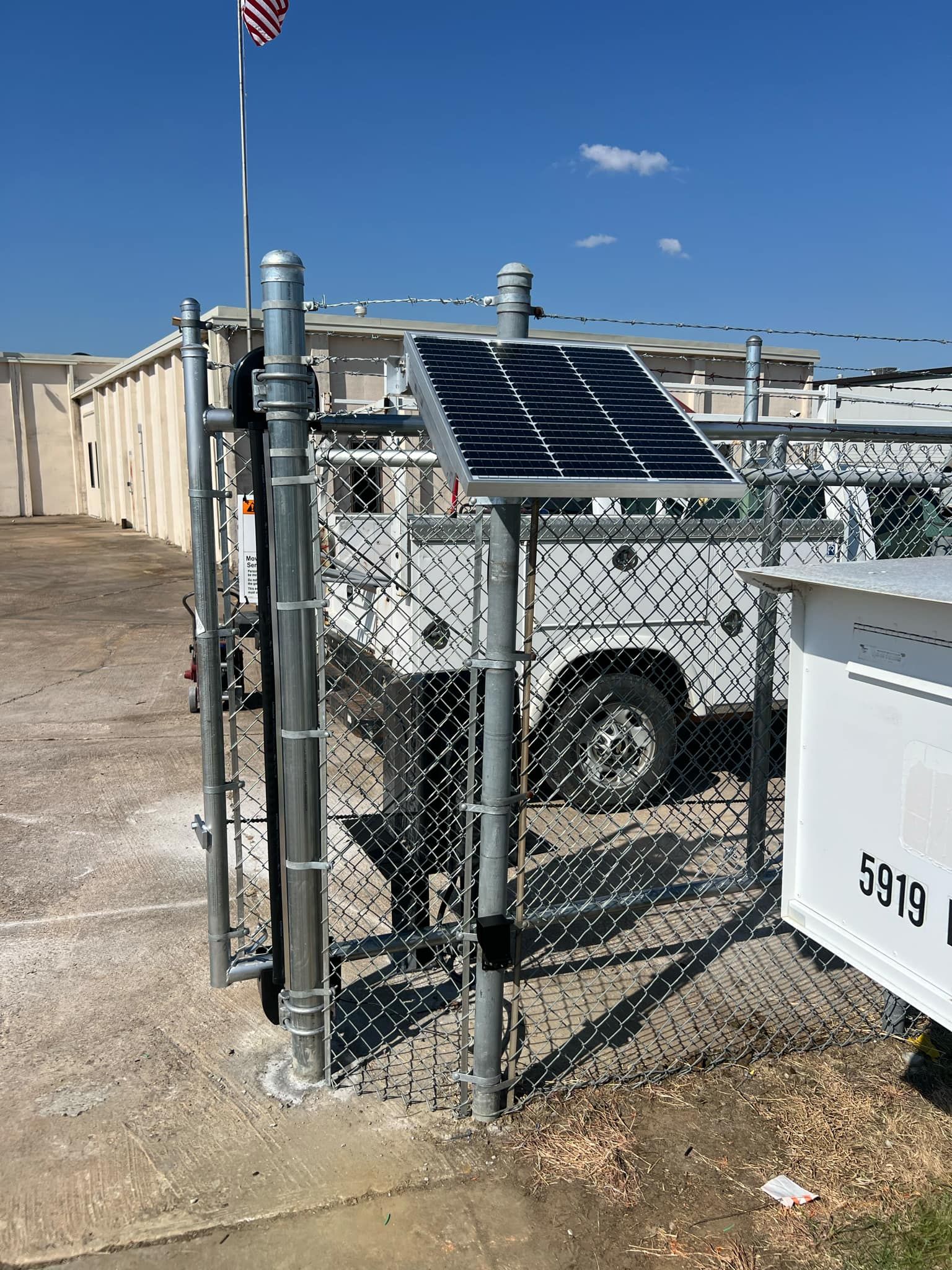
RADIUS designed a solar system for a commercial property that wanted to avoid cutting through approximately 100 feet of concrete driveway and parking area to reach the gate.
After evaluating the property, we discovered that the entrance was cycling close to 200 times per day—far beyond a typical residential application.
We increased the battery bank and available amp-hour storage so the charging system could maintain a much larger reserve. The project demonstrated that solar is not limited to lightly used farm gates.
High-cycle solar can work, but only when the panel capacity, storage capacity, operator efficiency and accessory demand are engineered around the actual traffic.
What Poor Solar Design Looks Like
RADIUS has been called to repair solar gate systems with:
- Completely discharged batteries
- Panels connected incorrectly
- Panels facing the wrong direction
- Heavy shade
- Undersized charging capacity
- Insufficient battery storage
- Excessive accessory loads
- Long runs using undersized wire
- Gates that drag or bind
- Failed or improperly configured charge controllers
Solar is straightforward when the system is properly designed. It becomes frustrating when someone installs components without understanding the relationship between sunlight, voltage, current, storage capacity, resistance and daily demand.
A homeowner considering a solar gate should ask the contractor:
- How many solar gate systems have you installed?
- How are you calculating our expected daily cycles?
- What accessories are included in the power calculation?
- How much battery reserve will we have?
- How will winter sunlight and shade affect the system?
- What maintenance will be required?
- Can you show us five to seven completed solar installations?
The photographs should show the contractor’s actual work—not manufacturer stock images.
A reliable solar entrance is not created by the panel alone. It comes from matching the gate, operator, charging system, batteries, accessories and site conditions as one complete system.
Further reading: USAutomatic solar guidance · U.S. Department of Energy: how solar works
Back to the guide ↑SECTION 07 / THE RESIDENTIAL GUIDE
Entrapment protection & safety
A safe gate must protect every direction of travel.
An automatic gate is a large moving object. Entrapment happens when a person, pet or object becomes caught or held in a position where the gate can pinch, crush, pull or trap it.
That risk is not limited to the driveway opening. A properly designed system evaluates the complete gate path—including the opening direction, closing direction, posts, columns, fence line, gate tail, hinges, rollers and space underneath the gate.
Where entrapment risks occur
Swing gates
Common swing-gate risk areas include:
- The gate’s closing path
- The space beneath the moving gate
- The hinge and operator areas
- The space between the gate and a wall, column or other fixed object
- The area where the gate rests when fully open
- Locations where children, pets or pedestrians may enter the gate’s path
Slide gates
Slide gates create additional shearing and draw-in hazards. Important areas include:
- The leading edge while closing
- The trailing edge while opening
- The space between the moving gate and its posts
- The adjacent fence line
- Exposed rollers and guides
- The gate’s entire counterbalance or tail section
- Openings that could allow a person’s hand, arm or body to enter the moving assembly
Horizontal slide gates generally require guarding or screening so a 2¼-inch sphere cannot pass through applicable openings from the bottom of the gate to at least six feet above grade, including the affected adjacent fence area.
Two layers of protection
A professional gate system does not rely on a single sensor. Modern systems generally require two independent means of entrapment protection for each identified entrapment zone.
Modern listed operators use inherent obstruction sensing—the operator’s ability to recognize abnormal resistance—along with qualified external monitored devices selected for the identified entrapment zones.
Monitored photoelectric sensors
A photo eye creates a non-contact detection field. When a person, vehicle or object interrupts that field, the operator responds according to the device location, direction of travel and system configuration.
“Monitored” means the operator checks that the external safety device is present and properly connected. It looks for conditions such as an open or shorted circuit during gate operation. This prevents a broken wire or failed sensor from silently eliminating a layer of protection.
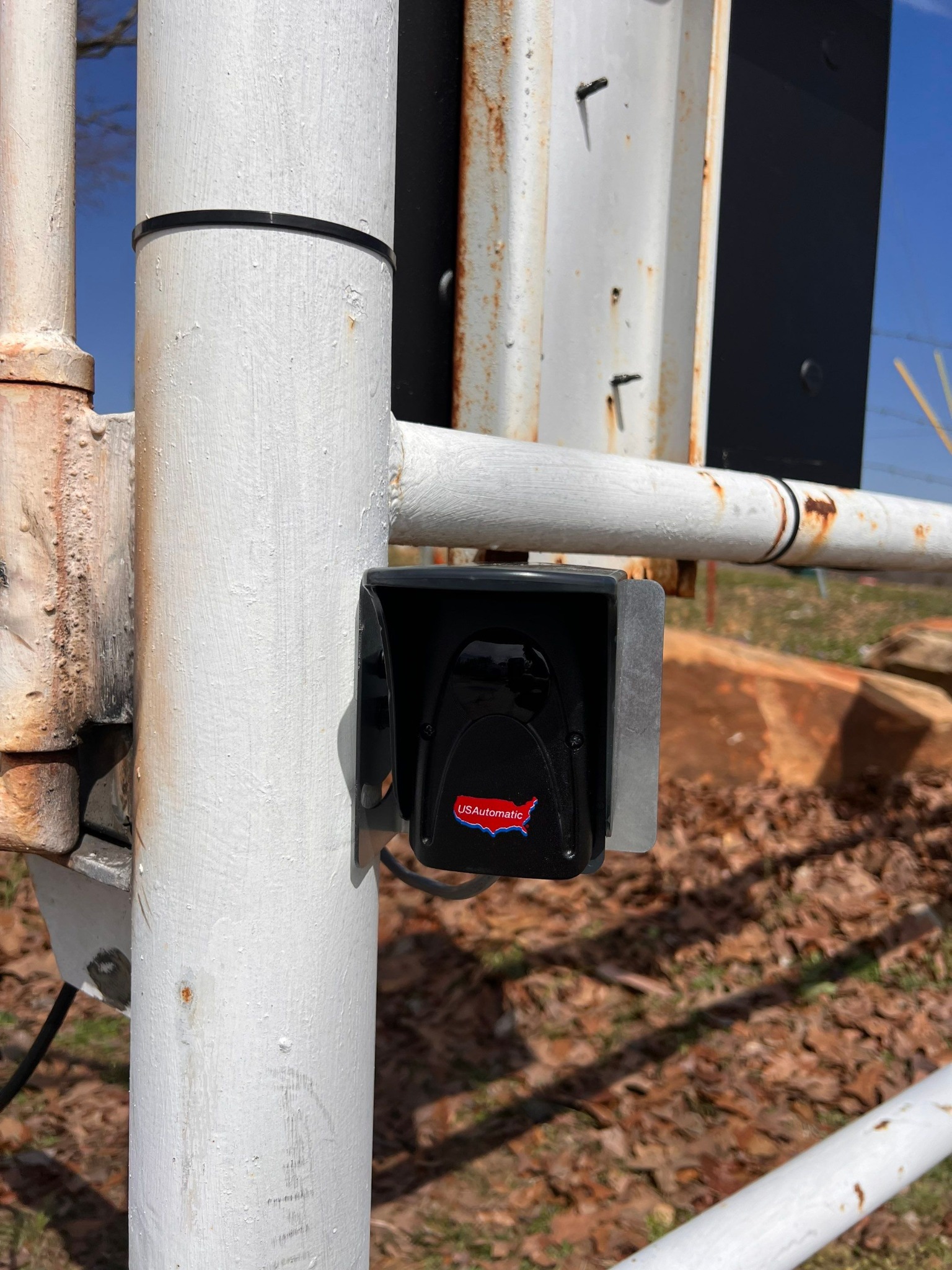
Monitored sensing edges
A sensing edge is a contact device installed along a hazardous gate edge or pinch point. When the edge physically contacts an obstruction, it signals the operator to stop and/or reverse as required and configured.
RADIUS frequently uses sensing edges on slide gates near the leading edge, trailing edge or locations where the moving gate passes a post or fence line.
Why built-in force detection is not enough
Inherent obstruction sensing is important, but it reacts after the gate encounters resistance. It also must be adjusted so ordinary Oklahoma wind, gate weight and seasonal movement do not create constant nuisance reversals.
A setting strong enough to move a large gate reliably may still produce enough force to seriously injure someone. That is why RADIUS designs external monitored protection around the actual hazards instead of relying entirely on the operator’s internal force setting.
How RADIUS tests a safety system
Before completing an installation, we:
- Identify the entrapment zones in both directions of travel.
- Confirm that the required monitored devices are connected and recognized.
- Interrupt each photoelectric sensor individually.
- Activate each sensing edge individually.
- Confirm the appropriate stop or reversal response.
- Test the operator’s inherent obstruction protection.
- Verify that access controls cannot be operated by reaching through the gate.
- Confirm warning signs are present and visible.
- Demonstrate the system and manual-release procedure to the owner.
The final safety design remains specific to the gate, operator and property.
When a gate that “will not close” may be protecting you
A gate that remains open is not necessarily broken. It may be responding correctly to:
- An obstruction in the photo-eye path
- Dirt, condensation, fog, frost or ice on a lens or reflector
- A sensor that has moved out of alignment
- Damaged wiring
- A depleted wireless-edge transmitter battery
- An activated sensing edge
- A failed monitored device the operator can no longer verify
Never bypass a safety device simply to restore automatic operation. Clean and inspect the device using the manufacturer-approved method, then contact RADIUS if the condition continues.
Children, pets and visitors
Children should never play on, around or operate an automatic vehicular gate. Remotes should be kept away from children, and pedestrians should be directed to a separate pedestrian entrance wherever pedestrian traffic is expected.
Gate activation controls should be at least six feet from moving gate parts and positioned so users cannot reach through, over, under or around the gate to operate them. This protects residents as well as delivery drivers, service providers and visitors who may not understand how that particular gate moves.
Cameras near the entrance can provide valuable documentation, but surveillance does not replace physical entrapment protection.
Testing and maintenance
RADIUS recommends:
- Homeowner safety-device testing every month
- Immediate retesting after changes to force, speed or travel limits
- Retesting after repairs, impacts or unusual gate behavior
- Professional preventive maintenance approximately every six months
- More frequent inspection for high-cycle, commercial or community entrances
Monitored devices help identify electrical failures, but they cannot detect every dirty lens, damaged bracket, physical hazard or developing mechanical problem.
If a gate contacts a person or vehicle
- Stop gate operation immediately.
- Check everyone involved and call 911 for any possible injury.
- Prevent the gate from operating again until it is evaluated.
- Photograph the gate, vehicle, sensors and surrounding area.
- Preserve available camera footage.
- Record what direction the gate was moving and how it was activated.
- Contact a qualified gate professional before returning it to service.
Correcting older installations
Older gates frequently lack active photo eyes, monitored edges, proper screening or protection in the opening direction. When RADIUS encounters those conditions, we explain the hazards and provide options for improvement.
In some cases, we may decline to continue repairing an installation unless its most serious safety deficiencies are addressed.
At one Midtown Tulsa property, RADIUS evaluated an approximately 1,200-pound slide gate with a dismantled photo eye, no active external protection and gate construction that did not satisfy current automated-gate safeguards. We added protection at both ends of the gate and installed two photoelectric beams to address the major travel and draw-in hazards.
The RADIUS position
Entrapment protection is not an optional accessory added after the gate works. It is a foundational part of the system.
RADIUS invests in CGAD training and continuing education so team members involved in gate consultation and design understand how the gate, operator, access controls and safety devices must work together. The goal is not simply to make the gate move—it is to make the entire entrance behave responsibly around the people who use it.
Technical references: DASMA gate-safety guidance · LiftMaster installation instructions. Follow the instructions for the specific equipment installed at your property.
Back to the guide ↑SECTION 10 / THE RADIUS GUIDE
Gate design, materials & curb appeal
The appearance matters. So do wind, structure, clearances, safety and long-term maintenance.
Appearance is only one design input
RADIUS can build simple, pre-manufactured, engineered or highly customized gates. The visual goal matters, but the gate’s weight, wind exposure, structure, available space, operator capacity and safety requirements determine whether the design will work for the property.
An operator belongs on a gate that moves freely. An attractive gate with poor hinges, inadequate posts, weak footers or excessive resistance will create problems regardless of the motor selected.
Oklahoma conditions
Solid privacy gates can act like wind sails during Oklahoma storms. They often require stronger structures and heavy-duty commercial-style equipment. Open-frame ornamental metal, aluminum and chain-link gates generally provide more flexibility, but each gate still requires an application-specific review.
Landscaping and hardscape can change the system after installation. Trees can block a photo eye or solar panel, branches can enter a slide-gate runback, and new columns or walls can create entrapment zones. A property owner should review future landscaping with the gate designer before planting or building near the operating path.
Swing and slide design
Swing gates need dependable hinges and clear travel. RADIUS favors sealed, ball-bearing hinge systems where appropriate, including welded systems that minimize long-term maintenance. Larger swing gates may require different structural and operator solutions.
Slide gates require the entire travel path and tail section to remain clear. External rollers and tracks need guarding where required, and engineered internal truck assemblies can provide a protected, lower-maintenance option. RADIUS generally discourages V-track gates in locations where Oklahoma ice and debris can make the ground track unusable.
Custom openings and safety
Custom designs must still satisfy the applicable construction and safety requirements. For applicable horizontal slide-gate openings, the 2¼-inch sphere rule and related screening requirements must be addressed. Decorative openings, protrusions and raking features can create pinch, draw-in or shearing hazards.
Photo eyes are non-contact devices. Sensing edges are contact devices. The required devices depend on the identified hazards, gate type and operator instructions. A fabricator who cannot explain how the design addresses safety is a warning sign.
Maintenance and weather
Ornate designs usually create more fabrication points and more opportunities for wear. Simpler designs may reduce long-term maintenance, but simplicity alone does not guarantee better operation.
During ice, snow or severe wind, RADIUS commonly recommends opening the gate and leaving it open or safely disconnecting it rather than forcing movement through conditions that can damage the gate. After a storm, check power, batteries, obstructions, swing clearance and slide-gate runback. If the gate moves slowly, stops, reverses or behaves inconsistently, disconnect it and call for service.
The best design is the one that delivers the desired appearance while remaining structurally sound, serviceable, safe and properly matched to the operator.
Bring the questions. We’ll look at the property.
A site visit connects these principles to your actual driveway, gate design, traffic and power options.